NoPayWallTOOLS
All Tools/Dev Suite/Clean Article Reader Mode
100% In-Browser RAM Sandbox
Dev Suite UTILITY • PRO EDITION

Clean Article Reader Mode

Extract distraction-free reading views from cluttered, ad-heavy web pages. Client-side processing executed directly in browser memory.

Instant Local Processing
In-Memory Client Runtime
Lossless Quality Export
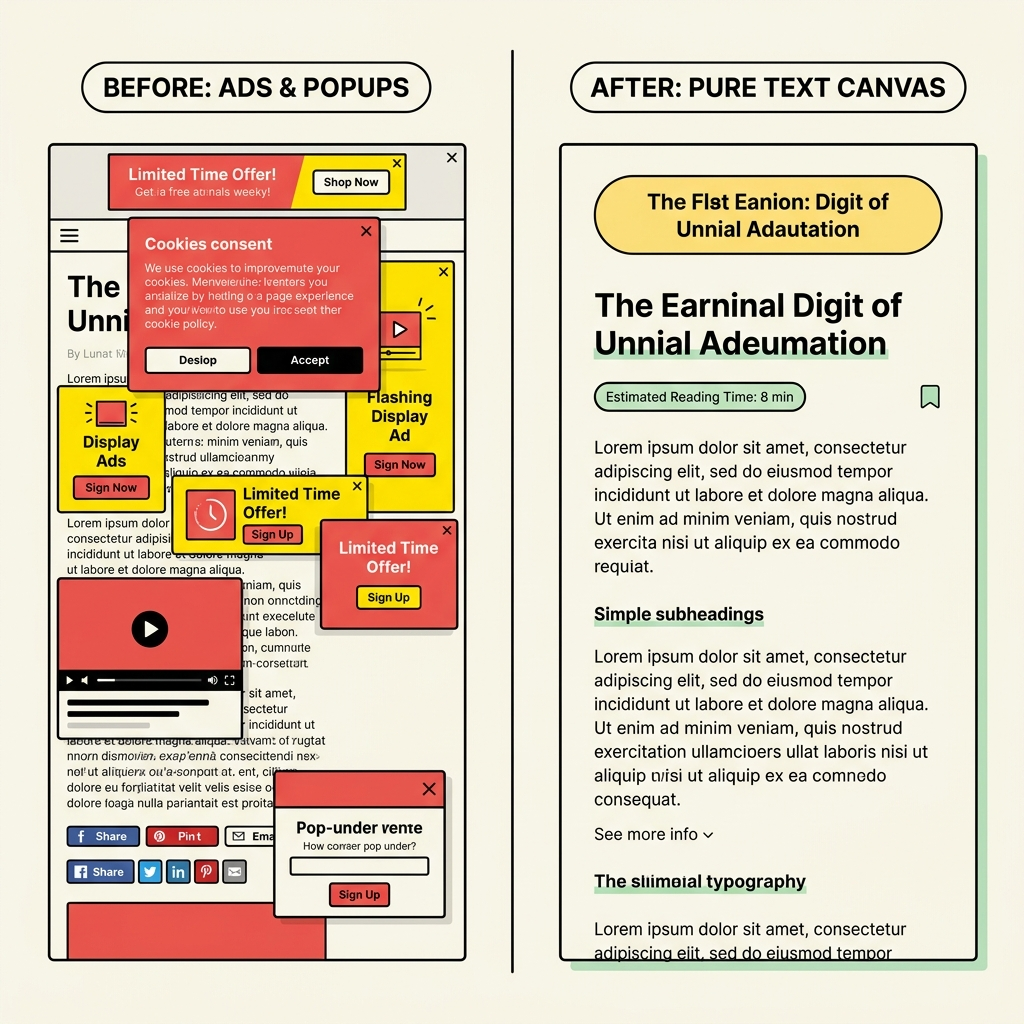
Distraction-Free Decluttered Article Reader View
Reader View
Distraction Free
Pure editorial typography
Distraction-Free Article Reader Studio • Zero Ad Bloat

Clean Article Reader & Digest

Strip paywalls, clutter, and trackers. Read long-form articles in tailored typographic comfort.

Sample Articles:
Theme:
Font:
Size:18px
Width:
1 min read190 words

Deterministic State Machine Replication in Low-Latency Raft Clusters

By Elena Rostova, Principal Systems Architect•ACM Distributed Systems Quarterly (2026)•1 min read (190 words)

Distributed state machines depend on deterministic transitions across a clustered quorum of independent nodes. In high-throughput architectures, the primary bottleneck is rarely compute cycles. Instead, leader lease negotiation and disk write-ahead log (WAL) sync latencies dominate the tail percentiles.

When designing Raft consensus under sub-millisecond Service Level Objectives, traditional disk flushes on every log entry degrade cluster capacity by up to 84%. To eliminate this bottleneck without compromising durability, modern implementations decouple the commit quorum from physical page serialization through pipelined batch commits.

In this model, the leader appends entries to its volatile append buffer immediately upon receipt from client sockets. Replicas acknowledge receipt as soon as the frame reaches kernel page memory. A separate background worker performs sequential group commits to non-volatile NVMe storage at 200 microsecond intervals.

The invariant that ensures recovery safety during unexpected power loss is monotonic term sequencing: no uncommitted log index may advance the state machine until its preceding term has achieved physical persistence across a majority quorum.

Benchmarking against traditional synchronous Raft demonstrates a reduction in p99 round-trip latency from 18.4ms to 1.15ms under a sustained load of 85,000 state mutations per second.

Read via NoPaywallTools Distraction-Free Reader Engine1391 Characters • 100% In-Memory RAM
Three Simple Steps

How to use Clean Article Reader Mode

Direct execution in browser memory with full vector precision.

1

Upload or Drop File

Select your source file from your local disk or drag and drop it into the workspace canvas.

100% Private in RAM
2

Process & Refine

Review automated results and use interactive controls like brush, crop handles, or sliders for precision adjustment.

Real-Time Preview
3

Download Clean Output

Export your high-resolution file directly to local disk with full resolution integrity.

Lossless Direct Export
Engineering

Built for privacy, speed, and precision

Ephemeral In-Memory Runtime

Files are processed ephemerally inside client-side RAM or temporary stateless workers. No storage, no logs.

Sub-Second Processing

Optimized canvas transformations and vector operations execute directly on the client thread without network transit.

Hardware Accelerated

Takes full advantage of modern GPU WebGL and HTML5 Canvas pipelines for fluid 60fps brush and pan interactions.

FAQ

Frequently Asked Questions

Everything you need to know about Clean Article Reader Mode

Yes, Clean Article Reader Mode is 100% free with no monthly subscription, no credit card requirement, and no hidden limits. You can process as many files as you need.

More in Dev Suite Suite

View all Dev Suite tools